
 Skip to content

Articles
How to Expand Your Product Line Without Increasing Overhead
Mar
Growing a business used to follow a predictable formula. If you wanted to sell more, you needed more inventory, more employees, more storage space, and more operational complexity. Expansion meant higher risk, larger investments, and often months of preparation before a single new product reached customers.
Today, that model is changing.
Modern brands are discovering that growth no longer requires building a bigger operation behind the scenes. With smarter supply chains, ready-to-launch product solutions, and outsourced fulfillment systems, businesses can expand their product offerings while keeping overhead lean and manageable.
Whether you run a wellness brand, retail store, ecommerce business, spa, gym, or online community, expanding your product line is one of the most effective ways to increase revenue without constantly chasing new customers. The key is doing it strategically.
This guide breaks down how established businesses can grow their offerings, increase profitability, and strengthen customer relationships without adding unnecessary costs or operational stress.
Why Product Expansion Is One of the Smartest Growth Strategies
Many businesses focus heavily on customer acquisition when trying to grow. Advertising budgets increase. Marketing efforts multiply. Teams work harder to attract new buyers.
But acquiring new customers is often far more expensive than selling additional products to existing ones.
Your current customers already trust your brand. They understand your values, recognize your quality, and are more likely to purchase again if you introduce products that align with their needs.
Expanding your product line allows you to:
- Increase average order value
- Improve customer lifetime value
- Create repeat purchase opportunities
- Strengthen brand authority within your niche
- Reduce reliance on constant advertising
Instead of scaling outward endlessly, product expansion allows you to scale inward by maximizing the audience you already have.
The challenge many businesses face is operational. Traditional expansion methods often require large investments upfront, which leads to hesitation or stalled growth.
The Hidden Costs That Make Expansion Feel Risky
When business owners think about adding products, they often imagine a long list of new expenses:
- Manufacturing minimums requiring large cash investments
- Warehousing costs and inventory storage
- Hiring staff to manage logistics
- Packaging design and compliance requirements
- Shipping operations and customer service support
These costs quickly add up, turning what should be a growth opportunity into a financial gamble.

Historically, brands needed to order thousands of units to make production viable. That meant guessing demand before validating whether customers actually wanted the product. Businesses were forced to make large financial commitments based on projections rather than real purchasing behavior, which created significant risk, especially for small and mid-sized companies trying to grow responsibly.
If demand fell short, businesses were left with excess inventory tying up cash flow, storage space, and operational resources. Unsold products often led to heavy discounting, reduced profit margins, or products sitting in warehouses for months. This not only affected revenue but also slowed a company’s ability to invest in new opportunities or respond to changing market trends.
This is why many companies delay expansion even when their audience is actively asking for more options or complementary products. The fear of overcommitting financially can outweigh the potential upside of growth. The good news is that modern product models have removed many of these barriers, allowing businesses to test, launch, and scale new products with far greater flexibility and significantly less risk.

The Shift Toward Lean Expansion Models
The most successful brands today are not necessarily the ones with the largest operations. They are the ones that operate efficiently.
Lean expansion focuses on adding revenue streams without dramatically increasing fixed expenses. Instead of building everything internally, businesses leverage systems that already exist.
This approach allows brands to:
- Launch faster
- Test products with minimal risk
- Scale based on real customer demand
- Maintain operational simplicity
Rather than reinventing manufacturing or logistics, businesses can plug into established infrastructure designed specifically for growth.
The result is expansion without operational overwhelm.
Start With Customer Demand, Not Product Ideas
One of the biggest mistakes businesses make when expanding is choosing products based solely on trends rather than customer behavior.
The most successful product expansions begin with listening.
Your audience is already telling you what they want through:
- Frequently asked questions
- Customer reviews
- Support inquiries
- Social media comments
- Repeat purchase patterns
For example, if customers consistently buy recovery products, they may also want preventative wellness options. If skincare clients love one product category, complementary items often feel like a natural next step.
Instead of asking, “What should we sell next?” ask:
“What problem are our customers already trying to solve?”
Expansion works best when new products feel like a continuation of your brand’s existing promise.
Expand Around a Lifestyle, Not Just a Product
Strong brands rarely succeed because of a single item. They succeed because they support a lifestyle or outcome.
When expanding your product line, think in terms of customer experience rather than individual products.
Consider how your offerings fit into your customer’s daily routine:
- Before activity
- During recovery
- Evening wind-down
- Long-term wellness maintenance

By expanding around moments or routines, products feel connected rather than random additions. Instead of appearing like unrelated launches, each new item supports a specific use case or lifestyle habit your customers already recognize. This approach increases cross-selling naturally because customers understand how each product fits into their lives, making purchasing decisions feel intuitive and purposeful rather than promotional or forced.
Use Ready-to-Launch Products to Reduce Risk
One of the biggest innovations enabling low-overhead expansion is access to ready-to-launch product lines.
Instead of developing formulas from scratch, businesses can introduce professionally developed products that are already manufactured, tested, and compliant.
This eliminates several costly steps:
- Research and development timelines
- Compliance and formulation testing
- Production setup delays
- Large manufacturing minimums
Ready-to-ship products allow brands to focus on branding, positioning, and customer relationships while experts handle production behind the scenes. This dramatically shortens launch timelines, often reducing months of preparation into weeks. As a result, businesses can respond faster to customer demand, test new ideas with less risk, and keep momentum going without slowing operations or overextending internal resources.
Why Fulfillment Matters More Than Most Businesses Realize
Adding products is only half the equation. Delivering them efficiently is what determines whether expansion feels manageable or overwhelming.
Fulfillment includes far more than shipping boxes. It involves:
- Inventory management
- Order processing
- Packaging accuracy
- Tracking updates
- Returns handling
- Customer delivery experience
When fulfillment becomes complicated, growth can actually slow down operations instead of improving them. Increased order volume often brings new challenges such as packing delays, inventory errors, and shipping bottlenecks that pull time and attention away from sales and customer experience. Instead of focusing on strategy and growth, teams can quickly become overwhelmed by day-to-day logistics.
Outsourced fulfillment solutions allow businesses to scale volume without hiring warehouse staff or managing logistics internally. By relying on established systems designed to handle storage, picking, packing, and shipping efficiently, brands can expand confidently without adding operational strain. Orders move faster, tracking remains accurate, and customers receive reliable delivery experiences that build trust and encourage repeat purchases.
This approach also improves flexibility. Businesses can handle seasonal spikes, promotions, or product launches without scrambling to increase staff or space. Customers receive consistent service while brands maintain a lean internal structure, allowing leadership to focus on marketing, partnerships, and long-term growth rather than operational headaches.
Expanding Without Hiring a Larger Team
Hiring is often the largest long-term expense businesses face. Salaries, onboarding, training, benefits, and ongoing management responsibilities quickly increase operational overhead and can place pressure on cash flow, especially during periods of growth. While expanding a team can be necessary at certain stages, many businesses discover that hiring too early creates complexity before systems are ready to support it.
Modern expansion strategies reduce the need for additional employees by automating or outsourcing operational tasks that traditionally required manual oversight. Technology and service-based infrastructure now allow businesses to operate more efficiently without sacrificing professionalism or customer experience. Instead of building large internal departments, companies can rely on proven systems that handle repetitive or time-consuming processes behind the scenes.
Businesses can scale efficiently by:
- Automating order confirmations, tracking updates, and shipping notifications
- Using fulfillment partners instead of maintaining internal shipping teams
- Leveraging pre-developed product solutions that eliminate lengthy development cycles
- Streamlining customer service with integrated support platforms and automated responses
These solutions not only reduce payroll expenses but also minimize human error and operational bottlenecks. As workflows become more predictable and scalable, business owners gain back valuable time and energy. This allows leadership and core teams to stay focused on revenue-driving activities such as marketing strategy, partnerships, customer engagement, and brand development rather than day-to-day logistics management.
The Role of Low Minimum Order Quantities (MOQs)
Low minimum order quantities have transformed how brands approach expansion. Instead of committing to massive inventory purchases, businesses can introduce products in smaller quantities and evaluate performance before scaling, allowing smarter decisions based on real customer demand and feedback.
Benefits include:
- Lower financial risk
- Faster product testing
- Improved cash flow
- Greater flexibility to adapt
If a product performs well, scaling becomes a confident decision rather than a gamble. If it doesn’t, businesses can pivot without major losses. This flexibility encourages innovation while protecting operational stability and preserving cash flow for future opportunities and strategic growth decisions.
Increasing Customer Lifetime Value Through Expansion
Customer lifetime value is one of the most important metrics for sustainable growth. The longer customers stay engaged with your brand, the more profitable your business becomes.
Product expansion increases lifetime value by giving customers reasons to return.
Instead of a one-time purchase, customers begin building routines around your products.
Examples include:
- Complementary wellness solutions
- Seasonal product variations
- Daily use essentials
- Recovery or maintenance products
Each additional offering strengthens the relationship between customer and brand.
Maintain Brand Consistency While Expanding
One common concern businesses have is losing brand identity when adding products. Expansion should feel cohesive, not scattered. Every new product should reinforce your brand message, visual identity, and customer expectations so growth strengthens recognition instead of creating confusion.
To maintain consistency:
- Keep packaging aesthetics aligned
- Maintain similar messaging and tone
- Focus on complementary benefits
- Introduce products gradually
A well-expanded brand feels intentional. Customers should immediately understand why each product belongs in your lineup. Clear positioning, consistent messaging, and aligned product benefits help create trust and make expansion feel natural rather than forced.
Testing Before Scaling
Smart brands treat expansion as an ongoing experiment.
Rather than launching multiple products at once, start with small releases and measure performance through:
- Sales velocity
- Customer feedback
- Repeat purchase rates
- Reviews and engagement
This data-driven approach allows businesses to refine their strategy before committing additional resources. Decisions become guided by real customer behavior, helping brands reduce risk, improve forecasting accuracy, and expand with greater confidence and clarity. Scaling becomes a response to success rather than speculation.
Operational Simplicity Is the Real Competitive Advantage
In today’s market, speed and adaptability often outperform size.
Businesses that can introduce new offerings quickly while maintaining efficient operations gain a significant advantage.
Operational simplicity allows brands to:
- Respond to trends faster
- Adapt to customer needs
- Reduce financial strain
- Focus on innovation
The goal is not to build a larger business overnight, but to build a smarter one.
Common Mistakes to Avoid When Expanding
Even with modern solutions available, businesses can still encounter challenges if expansion isn’t approached strategically.
Avoid these common pitfalls:
- Launching too many products at once
- Ignoring customer demand signals
- Overcomplicating branding changes
- Managing logistics internally too early
- Choosing suppliers without scalable systems
Expansion should reduce friction, not create it.
Growth Without Complexity Is Possible
For many businesses, expansion feels risky because it traditionally required new staff, larger inventory commitments, and operational changes that strained existing systems. Today, that model has changed. Modern product ecosystems allow companies to grow by adding capability rather than adding workload.
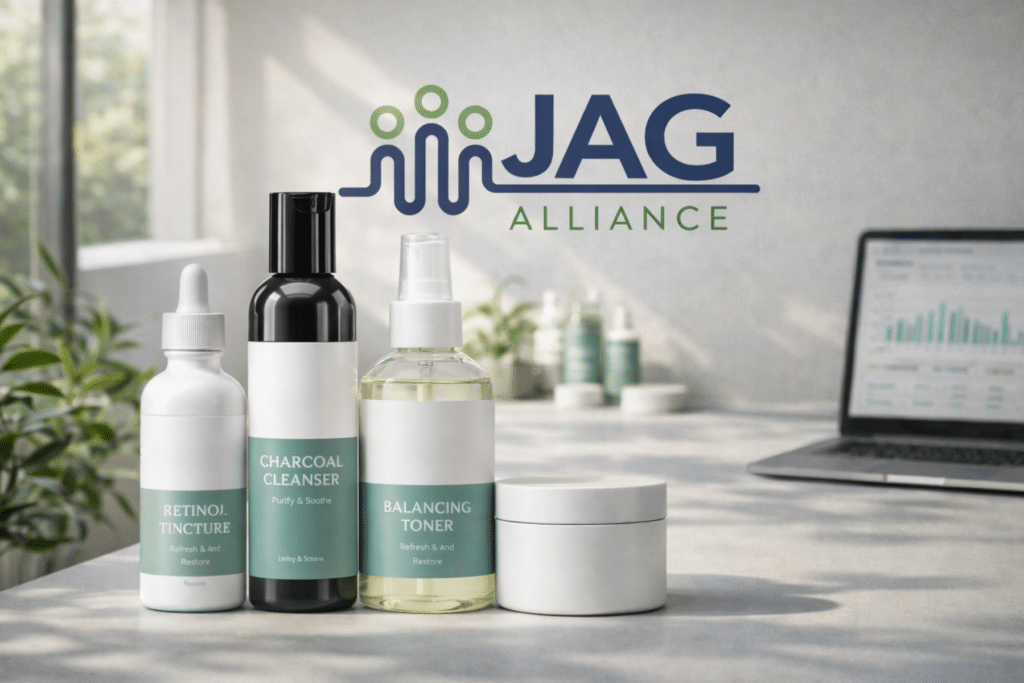
This is where structured partners become critical. JAG Alliance was built specifically to support brands that want to expand without increasing internal overhead. Instead of sourcing products, coordinating manufacturers, managing packaging vendors, and solving fulfillment logistics independently, businesses can access an integrated system designed to handle those layers behind the scenes.
Through private label, wholesale, and fulfillment infrastructure, JAG Alliance allows brands to:
- Add new product categories without managing production
- Launch quickly using ready-to-ship formulations
- Maintain brand consistency through professional labeling support
- Scale inventory gradually with flexible ordering options
- Fulfill orders without hiring warehouse or logistics staff
JAG Marketplace complements this model by providing ready-to-sell products that businesses can introduce immediately, allowing companies to test demand, expand offerings, or create new revenue streams without operational disruption.
The result is expansion that feels controlled instead of overwhelming. Businesses keep their teams focused on marketing, customer relationships, and growth strategy while operational complexity is handled through systems already built to scale.
When expansion is supported by infrastructure instead of additional workload, growth becomes sustainable rather than stressful.
A Smarter Path Forward
If your business is ready to expand, the next step is not hiring more people or rebuilding your operations. The smarter move is identifying where new products can fit naturally into your existing customer journey and partnering with a team that can execute the operational side for you.
Getting started with JAG Alliance is designed to be straightforward and consultative. Instead of forcing businesses into a one-size-fits-all model, the process begins by understanding your current brand, audience, and growth goals. From there, the team helps you identify product opportunities that align with what you already sell and what your customers already trust you for.
Working together typically includes:
- Reviewing your current business and expansion goals
- Identifying complementary product categories
- Selecting ready-to-launch or private label solutions
- Aligning branding and packaging with your existing identity
- Integrating fulfillment so orders ship seamlessly under your brand
This approach allows businesses to expand revenue streams while keeping operations lean and predictable. You are not adding complexity. You are adding capability.
Growth does not require reinventing your business. Often, it simply requires the right infrastructure and the right partner.
If you are ready to explore expanding your product line without increasing overhead, reach out to connect with the JAG Alliance team. We will walk you through available options, answer your questions, and help you map out a growth strategy built around efficiency, scalability, and long-term success.